

Whale Watching
Hervey Bay
Whale Watching Capital of Australia!
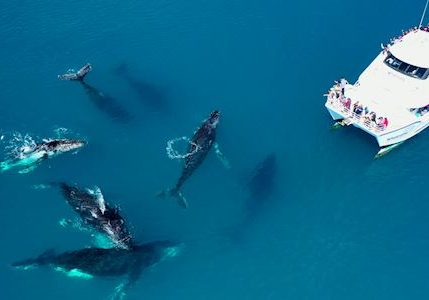
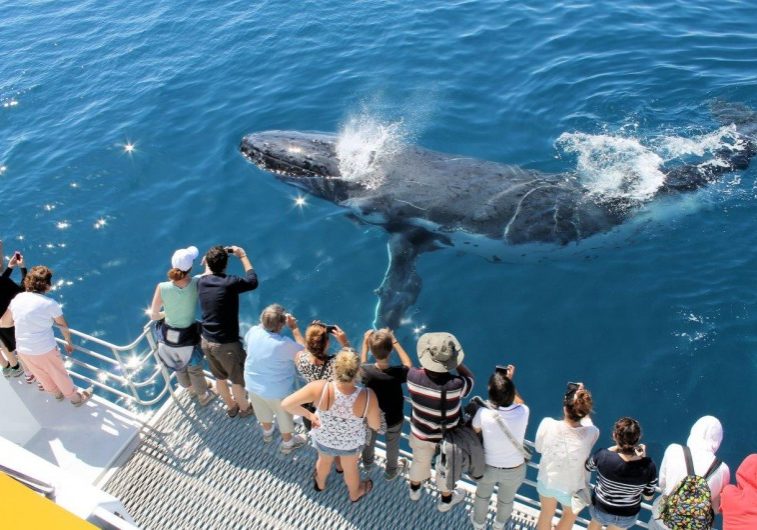
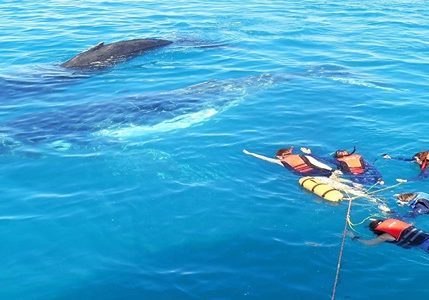
Each year from mid-July to October, there's no place like Hervey Bay on Australia's east coast for breathtaking, up-close, and personal encounters with majestic Humpback Whales. Hervey Bay was recognised as the world's first Whale Heritage Site and is known as the Whale Watching Capital of Australia! Unlike the typical 'whale migration highway' in other locations, thousands of Whales stay in the warm protected calm waters of Hervey Bay for weeks to rest, play, and give birth before returning to Antartica.

If you're finding it difficult to decide which is the best whale watching tour, we can help recommend the most suitable tour for you. We live in Hervey Bay and know each & every boat, operator & tour. The differences are mainly the time & duration on the water, the vessel type and its facilities, and the tour inclusions such as meals, hydrophone, swim with whales option, and other activities.
Whale Watching in Hervey Bay is unlike anywhere else in Australia.
-
Calm waters - behind K'gari (formerly Fraser Island) and inside the Great Sandy Strait creates a safe haven for whales.
-
Extended stopovers – whales spend days, not hours, in the bay.
- Close encounters - adult whales and calves approach stationery vessels to interact (called mugging).
-
World recognition – in 2019, Hervey Bay was named the world's joint first Whale Heritage Area together with The Bluff, in South Africa.
Whether you’re wanting a half-day cruise, a small-group adventure, or a complete getaway package, Experience Hervey Bay helps you compare tours and book the perfect Whale Watching experience.
The Hervey Bay whale watching season runs from mid July to October, with different highlights throughout:
-
Mid July & August – early arrivals, energetic adults
-
August & September – peak numbers, mothers with calves, calm weather
-
Late September & October – playful young whales learning breaching and tail slapping
A few fun facts!
- Adult humpback whales are about 13-15 metres long and weigh 35-40 tonnes!
- They can consume up to a tonne of food in a day.
- When swimming, humpbacks breath every 6-8 minutes and when resting every 10-20 minutes.
- Calves remain with their mothers for about 6 to 12 months nursing on fat-rich milk and growing rapidly.
- Hydrophones are microphones that crews lower into the water so you can hear whales singing (typically called "whale song").
Watch out for these whale behaviours!
- Head Slap - The whale raises its head clear of the water and slaps it on the water surface.
- Breach - the whale propels itself out of the water, clearing the surface with two-thirds of its body or more.
- Blow - as a whale exhales and inhales at the surface, a cloud of water vapour is produced above its head during exhalation.
- Pec Slap - the whale rolls sideways at the surface slapping a pectoral fin against the water.
- Tail Slap - forceful slapping of the tail fluke against the surface resulting in underwater sounds.
- Spy Hop - they lift themselves vertically upwards so their eyes are able to see above water level.
FAQ's
Q: When is the best time for whale watching in Hervey Bay?
A: The whale watching season in Hervey Bay runs from mid July to October, with peak sightings in August and September when humpbacks stay longer to rest and play.
Q: What types of whale watching tours are available in Hervey Bay?
A: There are a varitey of different vessels offering half-day and full-day cruises to premium experiences like swim-with-whales encounters and private charters. Check each boat to see which features you prefer.
Q: How close do the whales come to the boats?
A: Humpback whales in Hervey Bay are famous for their curiosity and often approach vessels to interact, sometimes within a few metres. It's called 'mugging'.
Q: Can you swim with whales in Hervey Bay?
A: Yes, selected operators offer licensed swim-with-whales tours, allowing small groups to enter the water under strict safety guidelines.
Q: Are Hervey Bay whale watching tours suitable for families and children?
A: Most tours are family-friendly with safe vessels, shaded seating, toilets, and refreshments onboard. Always check age requirements for swim tours.
Q: What should I bring on a whale watching tour?
A: Essentials include a hat, sunscreen, camera, jacket, and flat shoes. Operators usually provide morning/afternoon tea or meals depending on the tour length.
Q: Where do Hervey Bay whale watching tours depart from?
A: All tours depart from the Urangan Boat Harbour, just 10 minutes from Hervey Bay’s centre. Transfers from local accommodations may be available.
Q: Do tours operate in all weather conditions?
A: Tours run in most conditions, but may be rescheduled or cancelled for safety in rough seas or storms. Guests are offered refunds or rebooking options.
Q: How long is a typical whale watching tour in Hervey Bay?
A: Tours generally last 4 hours (half-day) or 6–8 hours (full-day).
Q: Why is Hervey Bay known as the whale watching capital of Australia?
A: Hervey Bay is the only place where humpbacks stop to rest and play on their migration, making it one of the best whale watching locations in the world.


